
Restorative dentistry in 2026 is all about early diagnosis, preservation of the enamel, and disease treatment before a filling is needed. James Island, ICON resin infiltration SC fits that shift. It treats selected early enamel lesions and white spot defects. But without the familiar drill and fill pathway. For patients who notice chalky patches after braces, mild fluorosis, or early non-cavitated decay, resin infiltration offers a conservative option that protects tooth structure while improving appearance.
Early Enamel Lesions Are Not the Same as Cavities
A white spot often signals mineral loss inside the enamel, while the outer surface may still remain intact. That distinction changes the treatment conversation.
When the enamel has not collapsed into a true hole, a dentist may have options beyond placing a traditional filling.
Why White Spots Look So Noticeable
Healthy enamel bends light differently from porous, demineralized enamel. That is why a white spot can look chalky, cloudy, or brighter than the tooth around it.
This is common after orthodontics, around plaque-heavy areas, and in some fluorosis patterns. A page focused on White spot treatment Charleston SC should explain the difference between stain, active early decay, and developmental enamel change. Those categories look similar to patients, but they do not behave the same clinically.
Resin Infiltration Fills the Porous Zone
ICON uses a low viscosity resin that enters the microscopic pores in an early enamel lesion. Once placed and light-cured, the resin helps block pathways that acids and dissolved minerals use during lesion progression.
A review on white spot lesions describes resin infiltration as a process that does not require drilling or tooth structure loss while also improving the way light reflects through affected enamel. That is the reason many patients see both a health benefit and a visible cosmetic change.
Case Selection Decides Whether ICON Is Appropriate
Resin infiltration works best when the enamel surface remains intact and the lesion has not become a broken or soft cavity. It is not a substitute for every filling.
A careful exam protects the patient from undertreatment, especially when decay has already moved beyond the stage ICON can manage.
Where ICON Usually Fits Best
The strongest candidates often have white spot lesions after braces, early smooth surface enamel decay, mild fluorosis, or shallow lesions between teeth that still qualify for non operative or microinvasive care. A dentist may use radiographs, visual inspection, drying, magnification, and caries risk assessment before recommending treatment.
Patients searching for no-drill cavity treatment James Island should understand that no drill does not mean no diagnosis. The dentist must confirm that the enamel has enough structure to infiltrate and seal.
When a Filling May Still Be Needed
A traditional restoration may serve better when the tooth surface has collapsed, decay extends deeply into dentin, the area traps food, or the patient has high ongoing caries activity. ICON cannot rebuild missing tooth structure.
That honest boundary matters. Conservative dentistry should not delay proper care when a lesion has already moved too far.
What the Appointment Usually Involves
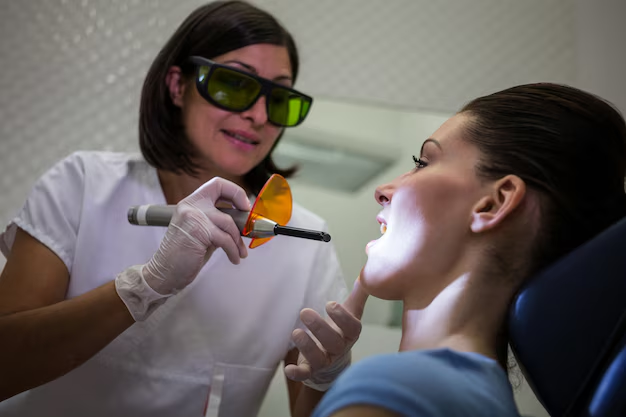
ICON treatment is usually a focused, quiet visit. The dentist isolates the tooth, conditions the enamel surface, dries the lesion, places the infiltrating resin, and cures it with light.
The details vary by case, but the goal stays simple. Treat the weak enamel zone while leaving healthy tooth structure in place.
| Step | Clinical purpose | Patient experience |
| Cleaning and isolation | Removes plaque and keeps the area dry | Helps the material work properly |
| Enamel conditioning | Opens the surface of the lesion | Usually feels gentle |
| Drying phase | Shows how well the spot may mask | Helps guide expectations |
| Resin placement | Infiltrates porous enamel | No drilling in suitable cases |
| Light curing and polish | Hardens and smooths the surface | Leaves a cleaner finish |
Why Dryness and Technique Matter
Resin infiltration depends on access to the porous enamel. Saliva, plaque, poor isolation, or an incorrect diagnosis can weaken the result.
That is why patients should choose a resin infiltration dentist SC provider who understands caries staging, enamel optics, adhesive materials, and cosmetic shade judgment. Technique matters here. Small details change the final look.
Results Can Be Subtle or Dramatic
Some white spots blend quickly after treatment. Others improve partially because the lesion is deep, old, fluorosis related, or uneven in density.
A good dentist explains this before treatment. ICON often improves the visual mismatch, but it should not be sold as magic whitening or as a porcelain veneer replacement.
How ICON Fits Modern Conservative Dentistry
Dentistry has moved toward smaller, earlier interventions because every drilled restoration starts a replacement cycle. Preserving enamel matters.
That is why resin infiltration sits between prevention and traditional restorative work, especially for patients who want to avoid unnecessary removal of healthy tooth structure.
A Local Education Gap in James Island
Many local patients know about whitening, veneers, and fillings, but fewer know that early enamel lesions may have a middle option. For the James Island area, a dedicated ICON resource gives patients clearer language around a treatment that often gets buried inside broader cosmetic dentistry pages.
That makes minimally invasive dentistry Charleston 2026 more than a trend phrase. It reflects a practical clinical approach. Diagnose early, preserve enamel, treat only what needs treatment, and keep future options open.
Long Term Success Still Needs Prevention
ICON can help manage selected lesions, but it does not replace brushing, flossing, fluoride exposure, diet control, and routine dental visits. Patients with frequent snacking, dry mouth, braces history, or high plaque levels need prevention alongside treatment.
A 2025 review describes ICON as useful for arresting non-cavitated lesions and improving esthetics, while also emphasizing indications, limitations, and clinical judgment.
Final Perspective
ICON belongs in modern dentistry because it answers a very specific problem without rushing into a filling. Evidence supports resin infiltration for selected early enamel lesions and white spot defects, particularly when the surface remains intact and the diagnosis is clear. ICON resin infiltration James Island SC gives patients a conservative choice when drilling may not be necessary. Tri-County Dental Arts welcomes patients to consult with the clinical team and review whether this drill-free option fits their teeth.
FAQs
What is ICON resin infiltration?
ICON resin infiltration is a no-drill treatment for certain white spots and early enamel lesions. The dentist places a special resin into the porous area of enamel to help blend the spot and slow early decay.
Is ICON treatment painful?
Most patients find ICON treatment very comfortable. There is usually no drilling and no numbing needed in many cases. The tooth is cleaned, conditioned, dried, treated with resin, and polished during the visit.
How much does ICON treatment cost in Charleston?
ICON treatment cost in Charleston depends on how many teeth need treatment, where the spots are, and how complex the enamel defect is. A dental exam gives the clearest estimate before treatment starts.
Who is a good candidate for ICON at Tri County Dental Arts?
A good ICON candidate usually has white spots, early enamel changes, or shallow non cavitated lesions. Tri County Dental Arts can check whether the enamel surface is still intact enough for this conservative option.