
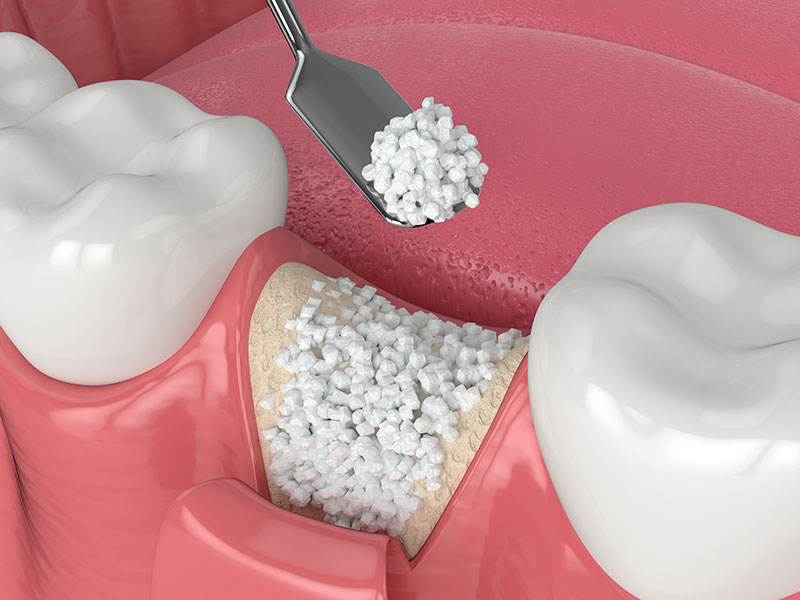
What Is Bone Grafting?
Bone grafting is a dental procedure that replaces missing or weakened bone in the jaw with healthy bone material. Over time, this graft stimulates your body to grow new bone, restoring the natural volume and strength needed for long-term oral health.
Why Do You Need a Bone Graft?
When a tooth is lost or extracted and not replaced promptly, the surrounding jawbone can begin to shrink. This process is called bone resorption, and it can lead to:
- Collapsed facial structure or a “sunken” look
- Difficulty supporting dental implants
- Shifting or loosening of nearby teeth
- Increased risk of gum disease and infection
Bone grafting is used to rebuild this lost bone, ensuring a stable foundation for your teeth and future restorations.
Indications for Bone Grafting
You may need a bone graft if you have:
- Bone loss in the jaw due to missing teeth or periodontal disease
- Preparation for dental implants when bone volume is insufficient
- Tooth extractions, especially in preparation for implants later
- Facial trauma or injury resulting in bone defects
- Developmental defects or congenital conditions affecting the jaw
Types of Bone Grafts We Offer
- Socket Preservation – Performed immediately after tooth extraction to prevent bone loss.
- Ridge Augmentation – Restores lost bone along the jaw ridge for implants or aesthetics.
- Autografts, allografts, or synthetic grafts – Depending on your needs, we’ll choose the best type of graft material.
What to Expect During the Procedure
Bone grafting is typically a straightforward in-office procedure. After local anesthesia or sedation, your dentist will place the graft material in the area of bone loss. The site is then secured and allowed to heal over several months as new bone naturally integrates. At Tri-County Dental Arts, we use the latest technology and techniques to ensure comfort, precision, and long-term success.
Benefits of Bone Grafting
- Restores bone volume and jaw function
- Enables dental implants and other restorations
- Prevents facial sagging and premature aging
- Improves oral health and bite stability
- Boosts your confidence with a healthier foundation
Why Timing Matters After Tooth Loss
Losing a tooth isn’t just about the gap people can see. There’s something happening underneath, too the bone in that spot can start to change once it stops getting the daily stimulation that chewing normally provides. That’s part of why patients sometimes hear about [Bone Grafting in Charleston SC] before moving ahead with certain restorative work, dental implants especially.
Bone support matters more than people might expect when it comes to how stable and natural a future restoration ends up feeling. Enough height, width, and strength in the jawbone give long-term treatment a much better foundation to work from. If bone loss has already started, though, a graft can help rebuild that area before the next step happens.
When a Bone Graft May Be Worth Discussing
- A dental evaluation might be worth scheduling if any of these sound familiar:
- A missing tooth that’s gone untreated for a while.
- A recent extraction site that could need implant support later.
- A history of gum disease that has affected bone levels.
- Teeth feeling loose, or a bite that doesn’t feel the same.
- Bone loss is showing up on dental X-rays.
- Noticeable facial changes near the jaw or a missing tooth.
- Wanting implants but not having quite enough bone to support them.
- Past trauma or injury to the jaw.
None of these automatically means a graft is necessary but they’re good reasons to get things checked early. Putting it off too long can sometimes turn a simpler plan into something more involved.
What the Dentist Looks at During Planning
A dentist isn’t just looking at the missing tooth itself before recommending a graft. The bigger picture matters too, since healing and goals look different from one patient to the next.
That evaluation usually covers:
- How much bone height and thickness is currently there?
- Gum health in that treatment area.
- Where exactly the missing or damaged tooth is located.
- The condition of the teeth nearby.
- Bite pressure and chewing patterns.
- Medical history and anything that could affect healing.
- Plans for a future implant or bridge.
- Comfort level and a realistic treatment timeline.
Going through this kind of planning helps patients actually understand why a graft makes sense for their situation, not just that it does. It also gives the dental team room to walk through timing, what healing should look like, and what typically comes next.
Supporting Healing After Treatment
Once a bone graft is placed, good home care and sticking to follow-up visits really do matter. Healing takes time the area needs a real chance to settle and strengthen properly.
A few things that tend to help:
- Following the aftercare instructions from the dental team closely.
- Keeping the area clean without disturbing the graft site.
- Steering clear of hard or crunchy foods early in healing.
- Taking any recommended medication exactly as directed
- Steering clear of smoking while things are still healing
- Not skipping scheduled follow-up appointments
- Mentioning anything unusual pain, swelling, bleeding right away
- Giving healing the time it needs before jumping to the next step
A bone graft can look like a small piece of the overall plan, but it tends to carry a lot of weight when it comes to long-term success. It helps prepare the mouth for implants, adds support after tooth loss, and keeps the jaw’s natural shape from changing over time.
For anyone missing a tooth, thinking about implants, or noticing changes in their jawbone, scheduling an evaluation is a good place to start. Careful planning upfront tends to make the next step clearer, more comfortable, and better matched to long-term oral health that’s the approach Tri-County Dental Arts takes with every patient.
Trust Your Smile to Dr. Boller and the Team at Tri-County Dental Arts
Dr. Matthew Boller and our expert team are experienced in advanced oral surgeries, including bone grafting procedures. Whether you’re planning for implants or restoring bone after extraction, we’re here to guide you every step of the way with gentle, expert care. 📍 Serving Charleston, SC and surrounding areas. 📞 Call Tri-County Dental Arts today to schedule your consultation and learn how bone grafting can rebuild the foundation of your smile. Book Online
Frequently Asked Questions
What is bone grafting for dental implants and why is it needed?
Bone grafting for dental implants in Charleston rebuilds jawbone structure, ensuring stable implant placement and long-term success at Tri-County Dental Arts.
What causes bone loss in teeth and jawbone?
Bone loss in teeth and jawbone in South Carolina is caused by missing teeth, gum disease, or trauma, often addressed through grafting at Tri-County Dental Arts.
How long is the healing time after a dental bone graft?
Healing time after a dental bone graft in James Island typically ranges from several weeks to months, depending on graft size and patient health at Tri-County Dental Arts.
How does bone grafting help in restoring jawbone density in James Island?
Bone grafting in James Island restores jawbone density by stimulating new bone growth, creating a strong foundation for implants at Tri-County Dental Arts.